Wedding Invitation Lettering Emily James: A Vintage Touch for Modern Designs
There's something undeniably special about typography that feels both personal and timeless. The Wedding Invitation Lettering Emily James collection captures that feeling perfectly—it's a black and white lettering set designed around the names Emily and James, presented in ornate vintage frames that evoke classic elegance. Whether you're working on wedding stationery, branding materials, or digital design projects, this kind of thoughtfully crafted lettering brings a warmth and sophistication that generic fonts simply can't match.
What Makes This Lettering Collection Stand Out
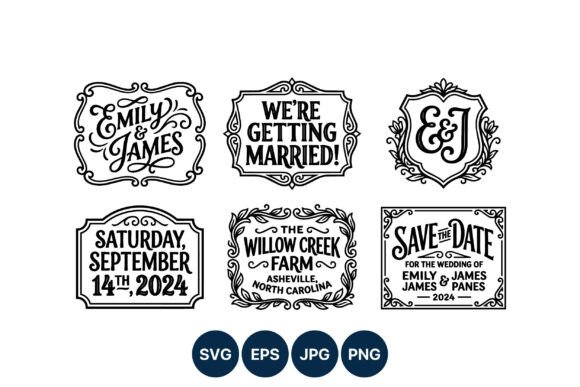
At its core, this isn't just a font—it's a complete design asset. The collection features hand-lettered names "Emily" and "James" styled in an ornate vintage aesthetic, accompanied by a save the date message, wedding announcement text, and farm location details. Each element sits within decorative frames that feel like they belong on a beautifully printed invitation from decades past, yet they maintain a crispness and clarity that works beautifully in contemporary design contexts.
The high-contrast black and white artwork is a deliberate choice. It ensures maximum readability while giving designers complete freedom to add their own color treatments, textures, or backgrounds. Because the download includes 100% vector files in SVG and EPS formats, you can scale these designs to any size without losing sharpness—whether you're printing a small favor tag or creating a large-format poster.
The file package itself is practical and versatile. You get SVG, PNG, JPG, and EPS formats bundled in a ZIP folder, which means compatibility with virtually every design tool on the market. From Adobe Illustrator and Photoshop to Canva, Procreate, Affinity Designer, and even free options like Inkscape, you'll be able to open and work with these files immediately.
Where This Style of Lettering Really Shines
Wedding-related projects are the obvious starting point. Save the dates, formal invitations, ceremony programs, reception menus, table numbers, thank-you cards—this lettering style was born for that world. The vintage framing and elegant script naturally communicate formality, romance, and attention to detail, which is exactly what couples want when announcing one of the biggest days of their lives.
But limiting this collection to weddings would be a missed opportunity. Think about how this aesthetic translates across other creative applications:
- Branding and logo design for boutique businesses, especially those in the wedding industry—planners, photographers, florists, caterers, and venue owners who want their visual identity to feel refined and established.
- Packaging design for artisan products, handmade goods, or luxury items where the vintage frame aesthetic communicates quality and craftsmanship.
- Social media graphics for announcements, milestone celebrations, or seasonal campaigns that need an elevated, editorial feel.
- Website headers and blog graphics where you want to create an emotional connection with visitors through typography that feels human and intentional.
- Print materials like business cards, letterheads, brochures, and promotional flyers for brands that lean into a classic or heritage-inspired identity.
- Merchandise and print-on-demand products—think tote bags, mugs, t-shirts, or art prints where ornate vintage lettering adds perceived value.
- Editorial layouts for magazines, lookbooks, or digital publications that need display typography with personality.
- Digital products such as downloadable templates, planners, or design kits where you want to offer customers something that feels premium.
The versatility here comes from the fact that ornate vintage lettering occupies a unique space in modern typography. It's not stuffy or outdated—it's nostalgic in a way that feels intentional and curated. Brands that use this style effectively often stand out precisely because so much of today's design leans heavily on minimalism and geometric sans serif fonts.
Making Typography Work for Your Brand
Choosing the right typeface or lettering style is one of those decisions that seems small but has an outsized impact on how your audience perceives your work. The Wedding Invitation Lettering Emily James collection works best in contexts where you want to communicate elegance, tradition, or a personal touch. But like any design asset, it's most effective when used thoughtfully.
Here are some practical considerations to keep in mind:
Match the mood to the message. Ornate vintage lettering carries specific emotional associations—romance, nostalgia, formality, heritage. If your project's tone aligns with those feelings, this style will amplify your message. If you're designing for a tech startup or a fitness brand, it might feel out of place. Context matters enormously.
Test your font pairings carefully. Display lettering like this typically works best as a headline or accent element, paired with a clean, readable body font. A simple serif font like Garamond or a modern sans serif like Montserrat can provide the contrast needed to keep your layout balanced. Avoid pairing ornate scripts with other decorative fonts—that combination tends to create visual chaos rather than harmony.
Consider readability at every size. Because this is high-contrast black and white artwork, it holds up well across a range of sizes. But ornate details in vintage frames can get lost when scaled too small, particularly in digital contexts like mobile screens. Use this lettering where it has room to breathe—at larger display sizes where the craftsmanship becomes a feature rather than an obstacle.
Think about your full design system. If you're building a brand identity, one lettering style doesn't exist in isolation. How does this ornate vintage aesthetic interact with your color palette, photography style, iconography, and overall visual language? The most cohesive brands treat typography as one piece of a larger puzzle.
Licensing and Commercial Use Considerations
Before incorporating any design asset into a commercial project, it's worth reviewing the licensing terms. Most premium font and lettering downloads come with a license that covers specific use cases—personal projects, commercial work, print-on-demand, or merchandise. Understanding these terms upfront protects you legally and ensures you're using the asset as intended.
For designers working with clients, clear licensing is especially important. You want to be confident that the lettering you're using in a client's logo, packaging, or marketing materials is properly licensed for that purpose. When in doubt, check the documentation included with your download or reach out to the creator directly.
Bringing It All Together
Good typography does more than display words—it sets a tone, builds trust, and creates an emotional bridge between your work and your audience. The Wedding Invitation Lettering Emily James collection offers a specific aesthetic that's hard to replicate with standard fonts. Its ornate vintage frames, high-contrast artwork, and versatile file formats make it a practical addition to any designer's toolkit, whether you're crafting wedding stationery, building a brand identity, or developing marketing materials that need to feel special and intentional.
The real value of a design asset like this lies in how you use it. Start with a clear understanding of your project's goals and audience, experiment with pairings and layouts, and let the lettering enhance your vision rather than dictate it. When vintage elegance meets thoughtful design, the results speak for themselves.